AI Perspectives with Sonny Patel (Socotra)
Politiques/opinions
|
June 11, 2026

We sat down with Sonny Patel, Chief Product and Technology Officer at Socotra, the insurance industry’s modern policy administration system. Sonny shares how Socotra is embedding AI into both its product and its engineering culture at the same time, and why getting that right in a regulated industry is as much a design challenge as a technology one. She makes a candid case that human oversight isn’t just good practice in insurance; it may soon be the law. Towards the end of our interview, we had just enough time for a rapid fire round!
Complementing Sonny’s story, our AI Corner this edition covers four developments reshaping AI in insurance: the declaration at Insurtech Insights USA 2026 that AI’s place in the industry is now settled and the bottleneck has shifted to data infrastructure, Anthropic’s release of Claude Opus 4.8 with honesty and reduced hallucination as the headline improvements, Bevaya’s InsurGPT going multimodal to read photos, diagrams, and scanned documents, and the hardening AI liability market as incumbents exclude AI-related damages and specialists rush in to fill the gap.
Building Trustworthy AI in Insurance: Lessons from Socotra’s Chief Product and Technology Officer
Sonny Patel has spent over 20 years building products at the intersection of technology and enterprise software, with stints at Amazon, Microsoft, and LivePerson before joining Socotra as Chief Product and Technology Officer. In this conversation, Sonny shares how Socotra, the insurance industry’s most modern policy administration system, is embedding AI into both its product and its engineering culture simultaneously. She makes a compelling case that AI in regulated industries is as much a design problem as a technology problem, and that the companies who get this right will be the ones that build trust with their users before they automate decisions for them. The discussion is grounded in Socotra’s direct experience launching Socotra Assistant into production, navigating emerging insurance regulation, and rethinking what productivity actually means in an AI-enabled engineering team.
Here are our key takeaways from the interview:
- The UI problem is harder than the technology problem: Anyone can plug in an LLM. The real challenge in a regulated industry is designing an experience where users can actually trust what they’re seeing, catch errors quickly, and course correct without friction. This was one of Socotra’s key takeaways while building the Socotra Assistant.
- “Human in the loop” is no longer just a best practice, it’s fast becoming a mandate: Roughly half of U.S. states now follow the NAIC’s AI bulletin calling for human oversight of AI-driven insurance decisions, Florida advanced a bill requiring a human to make the final call on P&C claim denials, and states like Connecticut have already banned AI-only denials in health insurance. [LINK][LINK][LINK]
- Auditability isn’t new. AI just makes it easier to do well: Insurance operations staff have always taken detailed notes, both to explain their actions and to help colleagues pick up where they left off. AI doesn’t change that behavior; it just removes the burden of doing it manually, and removes the excuse of being too busy to document.
- The bottleneck has moved from building to deciding: Prototypes that used to take weeks now take days, and everyone is making them. The problem is that now every idea looks viable and every stakeholder has a demo to show. The new constraint is the alignment conversation, not the build.
- If your AI productivity metric can be gamed in an afternoon, it’s the wrong metric: Sonny’s take on PR counts and token spend as measures of engineering output is visceral and fair. She’d rather track whether you’re shipping features faster which are being adopted by customers and whether those customers are reporting fewer bugs. Everything else is noise.
Let’s dive in.
Could you introduce yourself and give our readers a sense of what Socotra does and where AI fits in?
Sonny: I’m the Chief Product and Technology Officer at Socotra. Socotra is the insurance industry’s most modern and powerful policy administration system, which is essentially the system of record for insurance carriers. We support any insurance product line a carrier wants to offer, whether on the personal or commercial side, with a primary focus on property and casualty today and aspirations to expand into whole life insurance over time.
In terms of where AI fits, insurance is a domain with an enormous number of touchpoints between multiple parties, significant volumes of document processing, and complex decision-making at every stage. That combination is genuinely well-suited to what AI can do today. The nuance is around decisions specifically, because we want the humans who are trained in this space to remain the ultimate decision makers. AI can do the research, the summarization, and the drafting; humans make the call.
You launched Socotra Assistant in March. What does it actually do today?
Sonny: Socotra Assistant helps underwriters move through their workflows more efficiently. Users can ask freeform questions via a chat interface, but what we’ve invested most in is a set of pre-trained prompts built around the tasks underwriters perform most frequently. The most prominent is document extraction: taking a set of documents sent to an underwriter, pulling out the relevant data, and pre-filling the application or form they’re working on, including flagging any fields where the data doesn’t conform to the carrier’s own validation rules. Beyond that, it supports decision-making by surfacing insights, helps with document generation, and assists with workflow navigation more broadly.
Building LLM-powered features in a regulated industry like insurance is not straightforward. What did it actually take to get Socotra Assistant into production?
Sonny: It required tackling two distinct problems simultaneously, and I don’t think you can solve one without the other. The first is the technology problem: how do you use AI in a way that handles failures gracefully and maintains accuracy at a level that’s acceptable in a high-stakes environment? The second is the UI problem, and I think this one is underappreciated. You are working with technology that is by its nature non-deterministic and imperfect. The way you design the experience around that matters enormously. Users need to be able to review what the AI produced quickly, and when they spot an inaccuracy, they need a clear and easy way to correct it. If the experience doesn’t support that, you’re setting users up to either over-trust or distrust the system entirely.
Our core product design principle throughout has been keeping the human in the loop. At every point where AI produces an output, a human reviews it before any action is taken, especially any action that updates policy data. That’s not just a design philosophy for us; it’s increasingly a regulatory reality. The industry is starting to codify what responsible AI adoption looks like, and we think that’s the right direction.
You mentioned data privacy as a consideration when AI learns from user interactions. How are you thinking about that challenge in insurance specifically?
Sonny: This is a significant one, and I think it’s important to be honest that most of what we’re doing today relies on off-the-shelf publicly available models and services, which does create real questions around data sensitivity. The direction we’re exploring for the next horizon is hosting and training private models for each customer individually. The idea is that a carrier could train a model on their own data, making it essentially their most knowledgeable and experienced virtual advisor, without any risk of that data leaking to or being shared with anyone else. The model would only ever have seen that carrier’s data and would live in a privately hosted environment specific to them.
I don’t want to overstate how far along this is; it’s more of an active thesis than a launched capability at this point. But the conversations are already happening in the industry. The value proposition is clear: insurers want the benefits of AI learning from their proprietary knowledge, and they want the ironclad assurance that their customers’ data stays theirs. Building that trust, and being able to prove those guarantees technically, is where a lot of the hard work will be.
Beyond underwriting, where do you see the biggest opportunities for AI across the insurance lifecycle?
Sonny: Underwriting was the natural starting point because it’s one of the most operationally intensive functions for any carrier. But if you map the full insurance lifecycle from start to finish, AI has a role to play at almost every stage. Product research and design, identifying market opportunities and building products that meet both customer needs and regulatory requirements, is one area. Then all the operational workflows: billing, customer service, renewals, cancellations, reinstatements. Claims is a significant future opportunity as well, particularly around risk assessment and fraud detection. And ultimately, AI-driven analytics and insights could become the flywheel that feeds back into all of the above, helping carriers discover new product opportunities or improve existing ones. We had to start somewhere, and underwriting was the right call, but the goal is to eventually have AI supporting every meaningful step of that lifecycle with full auditability and a human in the loop for key decisions.
Let’s talk about auditability. Is it primarily a defensive posture, or do you see it as something that can actively drive improvement?
Sonny: It’s genuinely both, and I’d argue that even if it were purely defensive it would still be worth doing. But I think the more interesting frame is to ask what users were doing before AI in this area. Operations staff, whether they’re handling billing, customer service, or underwriting, have always taken detailed notes. They do it partly for accountability, so they can explain a decision if they’re ever asked. But they also do it for efficiency, particularly when a policy changes hands. The more detailed and accurate the notes, the easier it is for the next person to pick up and understand where things stand. AI is a natural amplifier of this behavior. Summarization, note drafting, drafting workflow updates: these are genuine strengths of the technology. The efficiency gain is real, the error rate goes down, and you remove the risk of someone simply forgetting to document something because they were busy.
What I push back on is companies that use auditability as an excuse to slow down adoption altogether. The concern is legitimate, but the response shouldn’t be paralysis. It should be a thoughtful design that makes AI outputs fully traceable and reviewable. That’s exactly what we’ve tried to build.
Where in the software development lifecycle have you seen the biggest gains from AI at Socotra?
Sonny: The area that has been most transformational, and I think this is true across a lot of organizations right now, is prototyping and early-stage alignment. What used to take weeks or months to produce a working prototype that you could get feedback on now takes days. That change is enormous for how we have conversations about what to build and why. Every role in the organization is prototyping at this point, including me personally. The iteration loop from idea to something you can put in front of a stakeholder has collapsed in a way that feels almost disorienting when you think back to how things worked a year ago.
That said, I’ve noticed a real limitation at the other end of the process, what I think of as the fit-and-finish stage. Getting from a prototype that’s roughly right to one with precise, production-grade design fidelity is still genuinely hard with current tools. There are patterns these tools default to, specific design choices that have become something of a signature, that are not our design language. And when you ask for a precise change in one place, the model has a tendency to introduce regressions elsewhere. For that final stage of design work, we’re often going back to more traditional methods. That last ten percent is still the hardest part.
You’ve been vocal about PRs as a metric. What’s your interpretation of it, and what would you measure instead?
Sonny: The issue is that it’s a metric that can be gamed almost immediately, and engineers are very good at optimizing for whatever you measure. If you tell me my performance is being evaluated on the number of pull requests I submit, I can generate a hundred a day without producing anything valuable. And I’ve read about organizations that are incentivizing engineers to maximize token spend, which I find similarly concerning. A clever engineer will just build an agent that burns tokens. That’s not productivity; that’s theater.
If I had to pick three metrics that actually proxy for value, I’d choose pace of delivery, customer adoption and reduction in customer-reported defects. The first tells you whether you’re actually shipping things, not just producing code. The remaining two tell you whether what you’re shipping is useful and of good quality. Those are harder to game and more directly connected to what actually matters to customers.
What separates the people at Socotra who are running with AI from those who are still figuring it out?
Sonny: I think the early adopters have always existed in every organization, even before AI. There’s a personality type that’s just naturally curious about what’s coming next and moves toward it. AI amplified that because the topic was impossible to ignore. But what I find more interesting is how much the broader conversation has shifted in just the last six months or so. A year ago, there were still genuine debates in a lot of organizations about whether to adopt AI at all. That debate feels largely over now. The question has moved from “should we” to “how are we doing it and how much.” I don’t have to convince anyone in our engineering or product organization to engage with AI tools anymore. The conversation is entirely about how to use them well.
What I do still see as genuinely variable is the quality of the underlying thinking people bring to working with AI. The temptation, especially with prototyping tools, is to jump straight to building something because it’s so fast and easy. The discipline of starting from the customer problem, understanding why solving it matters now, and getting alignment around that before touching any tool: that hasn’t changed and in some ways matters more than ever, precisely because the barrier to building has dropped so much.
We had time for a few rapid fire questions.
Anthropic or OpenAI?
Sonny: Anthropic, hands down.
If you add Google (and Gemini) to the mix, does your answer change?
Sonny: Still Anthropic.
Figma or Claude Design?
Sonny: Figma, for now. Claude Design looked genuinely promising, but I ran out of tokens within a few hours and it doesn’t draw from the main Claude subscription pool. Once that’s fixed, I’d revisit it. Until then, Figma.
Will closed-source models continue to dominate, or can open source make a comeback?
Sonny: I think there’s room for both, but if I had to pick one, I’d lean closed source, primarily because of the investment and compute advantages the major labs have.
Data centers on Earth or data centers in space?
Sonny: Space. I’m a huge sci-fi fan. It’s an exciting dream and I’m not going to talk myself out of it.
In the AI Corner, where we highlight key updates from the fast-paced world of AI, and what we are reading at Sagard.
- OpenAI and Anthropic take center stage at the industry’s flagship conference – and the debate is declared over. Insurtech Insights USA 2026 ran June 3-4, with featured talks from Anthropic and OpenAI kicking off main-stage programming, drawing 6,000+ attendees and 400+ speakers across six stages. The framing was notable: organizers concluded that AI’s place in insurance is now settled, and the real question has shifted to the readiness of the data infrastructure beneath it. Learn more here and here.
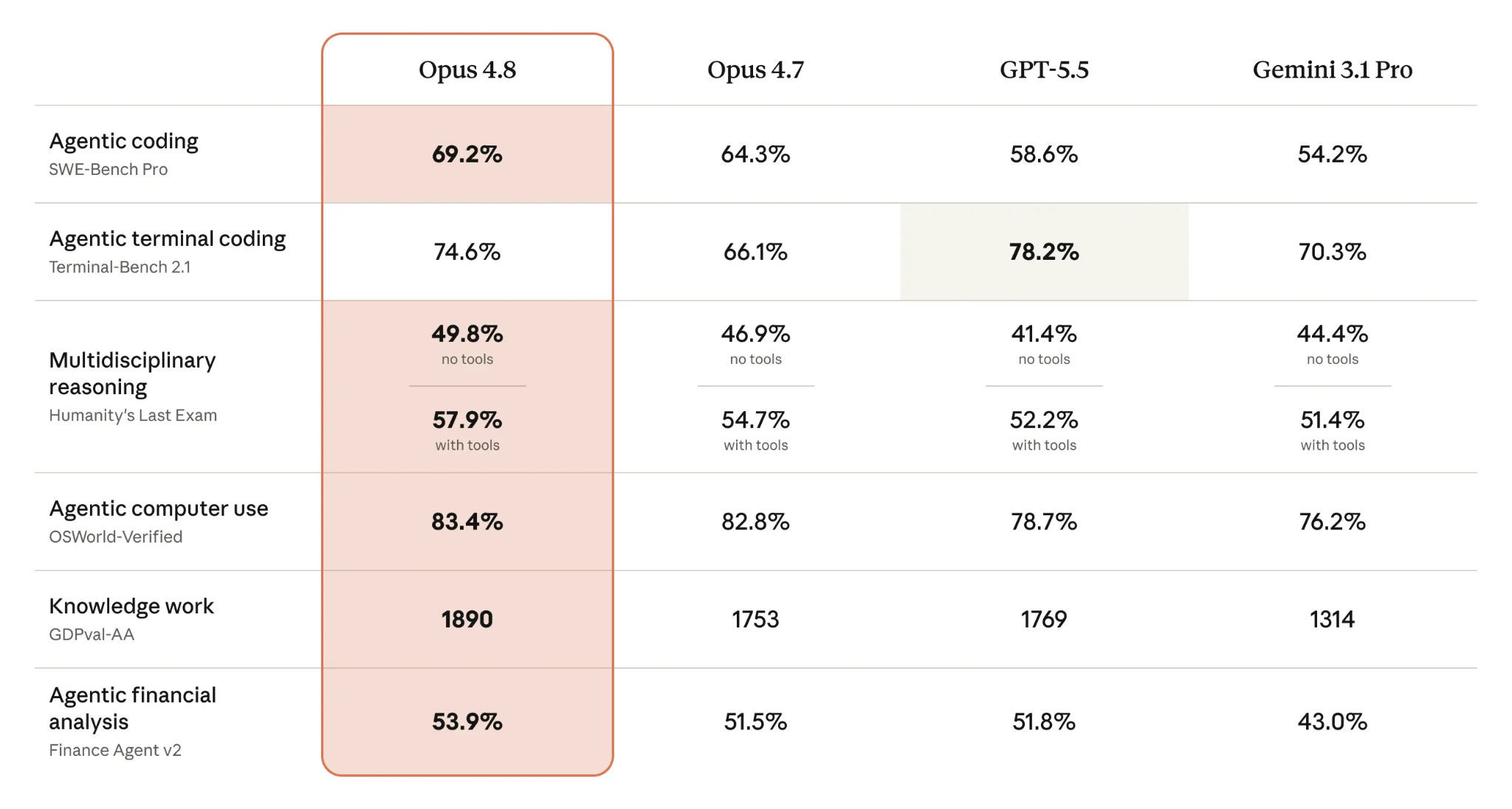
- Claude Opus 4.8 – Anthropic makes honesty the headline and goes after 4.7’s fabrication problem. Anthropic released Opus 4.8 on May 28. The interesting tell is what they optimized for: honesty is the centerpiece of every official communication, and the model is explicitly trained to reduce factual hallucinations across three stated axes - honesty, agentic efficiency, and code quality. It shows in the numbers - Opus 4.8 posts the lowest incorrect-rate of the six leading models on every benchmark, achieved mainly by abstaining when it’s uncertain rather than answering more often. The win comes largely from calibrated abstention, not from being right more often, so on some evals the raw hallucination rate is roughly flat. Learn more here and here.
- InsurGPT goes multimodal – the domain model learns to read photos, diagrams, and scans. The leading AI insurance product came with Bevaya’s May 28 launch. InsurGPT – an ensemble of specialized models trained on 300M+ proprietary insurance documents – now analyzes photos, diagrams, and scanned images within submissions, claims, and supporting documents, extracting context that text-only AI misses, paired with confidence scoring and a highlight-mode that maps every extracted data point to its exact location on the source document. Learn more here.
- AI liability hardens into its own line: incumbents exclude, specialists rush in. The market is bifurcating. Berkshire Hathaway, Chubb, and Travelers asked regulators to exclude AI-related damages from general liability policies, and more than 80% of those requests were approved, led by Florida, Connecticut, and Maryland; Berkley introduced absolute AI exclusions across D&O, E&O, and cyber. Filling the gap, Munich Re plus startups Corgi, Armilla, Mayflower Specialty, and Embroker are writing standalone AI liability policies with limits from $2 million to $50 million. Y Combinator-backed Corgi launched its product around May 5, covering financial and legal exposure from algorithmic bias, autonomous decisions, and AI-generated errors. Learn more here and here.


Want to write about us?